Manual Drafting Tools for Architects: Essential Supplies for Hand Drafting
Learn which manual drafting tools architects use, including T-squares, triangles, compasses, architect scales, templates, drafting pencils, vellum, erasers, drafting tables, parallel bars, and other hand drafting essentials.
Manual drafting remains an important part of architectural training, sketch development, and traditional design practice. Even though digital tools now handle much of the production work, many architects, students, and designers still value the clarity, control, and tactile experience of drawing by hand.
Hand drafting encourages careful thinking, strong line discipline, and a closer connection to the drawing process. It also relies on a specific set of tools, from basic rulers and triangles to drafting tables, templates, technical pens, and specialty papers.
This guide covers many of the essential manual drafting tools architects use and explains what each tool does, why it matters, and where it fits into a traditional drafting workflow.
Why Manual Drafting Still Matters
Manual drafting is more than a nostalgic holdover. It still helps students and professionals develop spatial thinking, line control, layout discipline, and a deeper understanding of how drawings are built.
- Strengthens drawing fundamentals
- Supports concept development and sketch refinement
- Builds understanding of scale, proportion, and line hierarchy
- Creates a direct, hands-on design process
Drawing Instruments

T-Square
A T-square is one of the classic tools of manual drafting. It is used for drawing straight horizontal lines and serves as a guide for other tools such as triangles.

Triangles
Triangles are used to create accurate vertical lines, angles, and perpendiculars. Common configurations such as 45-45-90 and 30-60-90 make them useful for a wide range of drafting tasks.

Compass
A compass is used for drawing circles and arcs with precision. It is a simple tool, but an essential one for any manual drafting setup.

Architect Scale Ruler
Architect scales help convert real-world dimensions into scaled drawings. They are essential for maintaining proportion and consistency in architectural work.
Architectural Templates

Architectural Symbol Templates
Architectural templates help users draw standardized symbols such as doors, windows, stairs, and fixtures more quickly and consistently.

Basic Geometric Shape Templates
General-purpose templates are useful for drawing circles, squares, rectangles, and other common shapes that appear in architectural and technical drawings.
Technical Pens and Drafting Pencils

Mechanical Pencils
Mechanical pencils give architects clean, controlled line work and are a standard choice for detail drafting, layout work, and sketching. Different lead sizes and grades make them useful for varying line weights and levels of detail.

2mm Lead Holder
A 2mm lead holder offers a slightly more traditional drafting feel with a thicker refillable lead. It works well for drafting, sketching, and controlled hand drawing.

Inking Pens
Technical and inking pens are used for crisp, permanent lines in presentation drawings and reproducible work. They remain a classic tool for architects who value ink drafting techniques.

Non-Photo Blue Pencils
Non-photo blue pencils are often used for preliminary sketching and layout because the blue marks are less likely to appear in reproduction and scanning workflows.
Drafting Paper and Pads

Tracing Paper
Tracing paper, sometimes called onion skin, is useful for overlays, concept refinement, and exploring alternate design ideas without committing to a final line too early.
Vellum
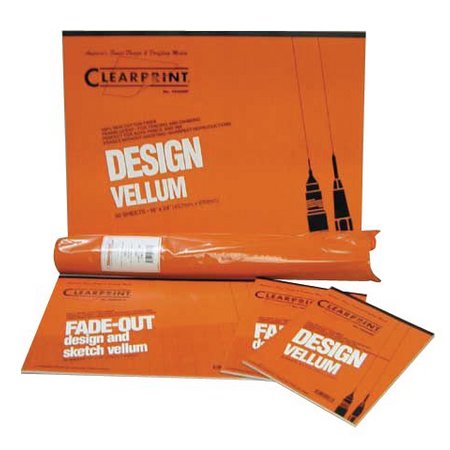
Drafting vellum offers a smooth, durable surface with excellent contrast for line work. It is often used for more finished drawings and presentation-quality hand drafting.
Erasers and Correction Tools

Vinyl Erasers
Vinyl erasers remove pencil lines cleanly without being too harsh on the paper, which makes them a dependable tool for corrections and line cleanup.

Erasing Shield
Erasing shields help isolate small areas of a drawing so only the intended marks are removed. It is a small tool, but a very useful one for detailed corrections.

Dusting Brush
A drafting brush helps clear away eraser crumbs and graphite dust without smudging the drawing surface with your hand. Tiny broom, very respectable job.

Drafting Cleaning Pad
Also known as a scum bag or blotter pad, this tool helps absorb moisture and reduce smudging while working on the drawing surface.
Drawing Boards and Drafting Table Accessories
Drafting Table
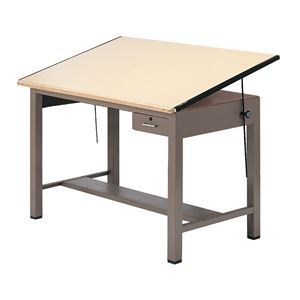
A drafting table provides the core work surface for manual drafting. Adjustable tops and a stable drawing area help support better posture and smoother line work.

Parallel Bar or Straightedge
A parallel bar helps users draw consistent parallel lines across the board without resetting for every pass, which improves both speed and accuracy.
Portable Drafting Board
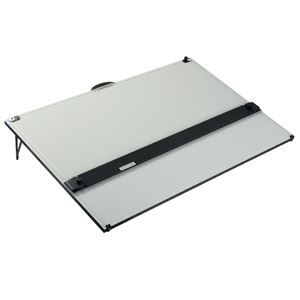
A portable drafting board makes it easier to work in different locations, whether in a classroom, office, job site, or home setup.

Drafting Tape and Dots
Drafting tape and dots are used to secure sheets, attach overlays, mask areas, and keep work in place without overly damaging the paper.
Building a Manual Drafting Setup
For Beginners
Start with the basics: pencils, scale, triangles, eraser, tracing paper, and a reliable drawing surface.
For Architecture Students
Add templates, vellum, a compass, technical pens, and either a drafting board or portable board setup.
For More Advanced Users
Upgrade to better drafting tables, parallel bars, premium pens, specialty papers, and refined correction tools.
Why Architects Still Value Hand Drafting Tools
Manual drafting remains a meaningful part of architectural practice and training because it combines technical discipline with direct physical engagement in the drawing process. Digital tools are powerful, but many architects still appreciate the way hand drafting sharpens observation, control, and design thinking.
There is also something satisfying about the quiet logic of a good drafting setup. A straightedge, a scale, a sharp pencil, and a blank sheet still make a pretty convincing case for themselves.
Shop Manual Drafting Supplies for Architects
From drafting tables and portable boards to templates, scales, pencils, pens, vellum, and correction tools, the right setup can make hand drafting more accurate, more efficient, and more enjoyable.